.svg)
.svg)
Stuart Tolley is the author of Collector's Edition, a beautiful book about specialist music, book, and magazine design published by Thames & Hudson, and something that musicians like Sir Paul McCartney and Nick Cave happily contributed to. It also happened to raise thousands of pounds for charity.
Tolley is recognised by many as one of the UK's best contemporary designers and has been featured in Creative Review and Campaign. His work was also highlighted in Made & Sold: Toys, T-Shirts, Prints, Zines and Other Stuff, a book featuring some of the world's leading artists, designers, and illustrators.
His studio clients currently include super-yacht designers, independent record labels, lifestyle brands, charitable organisations and book publishers.
We caught up with the very talented Stuart to chat about his creative life...
First of all, how did you get into graphic design?
I remember being aware of graphic design from a school age. I loved my Dad’s record collection, in particular the legendary cover artwork for Cream’s ‘Disraeli Gears’, and also a die-cut black and silver gatefold vinyl for Thin Lizzy’s ‘Jailbreak’ album. The artwork had a great effect on me. Graphic design is pretty much all I ever wanted to do – except maybe a brief flirtation with wanting to be a racing car driver. It also felt natural to follow my interest in art and photography.
I left school to complete an art college qualification, instead of a foundation, which led me to study Visual Communication at the Birmingham Institute of Art and Design. I completed the BA and a Masters degree followed shortly afterward. From Birmingham, I moved to London and was quickly employed at the style magazine Sleazenation. It all went from there.
Tell us about a typical working day
I’m currently writing my second book, to be published by Thames & Hudson this autumn, so a typical day starts in the studio at 7:30 am. I'm in the research, contact and still life photography stage of the book, which will continue for another month before starting a heavy design period. There are currently lots of forms to send out and contacts to be made, which is heavy on the admin, but I really love the research side of the project.
I'm trying to be very regimented, so I work for two-three hours on my new book and then pick up studio projects for the rest of a full working day. I collaborate with different editors, journalists, illustrators, and photographers and am currently juggling a number of projects that are at various stages of production. This means I have to flip between different projects throughout the day, depending on their deadlines. One hour I'm researching illustrators to commission for a book project and the next experimenting with typographic styles for another.
I also have a number of ongoing non-fiction book jacket commissions, which I enjoy for being design-led, as a way to break up the art direction. I have worked on a number of biographies, my favourite being the cover of a Tom Waits book, and an on-going Philosophy series, where I visualise very serious abstract concepts into graphic patterns.
What has surprised or disappointed you about the industry you work in? What would you like to see change, if anything?
Nothing major has really surprised or disappointed me. I have worked through some weird times in the industry and recently noticed things coming full circle, particularly in publishing. When I first started working in the editorial industry, there was a lot of doom and gloom that websites, apps, and tablets were going to kill the printed page.This went on for years, and to some extent still goes on today, and I always found the 'print versus digital' or 'print isn't dead' debate very boring. I'm not sure traditional publishers knew how to adapt to the digital environment, believing it couldn't coexist with print, but hopefully we are over that now.
I never really liked the 'us versus them' environment it bred and it's fantastic to see a number of independent publications finding their own voice in digital and print platforms.
What tools, apps, and software can you not survive without?
While working on my new book I cannot live without my set of Bowens Gemini 500w studio lights. I commissioned a set build for the project and the lights are pivotal to photographing each featured example. This is a massive undertaking, probably taking about a year on its own, but the Bowens lights have totally transformed the project.
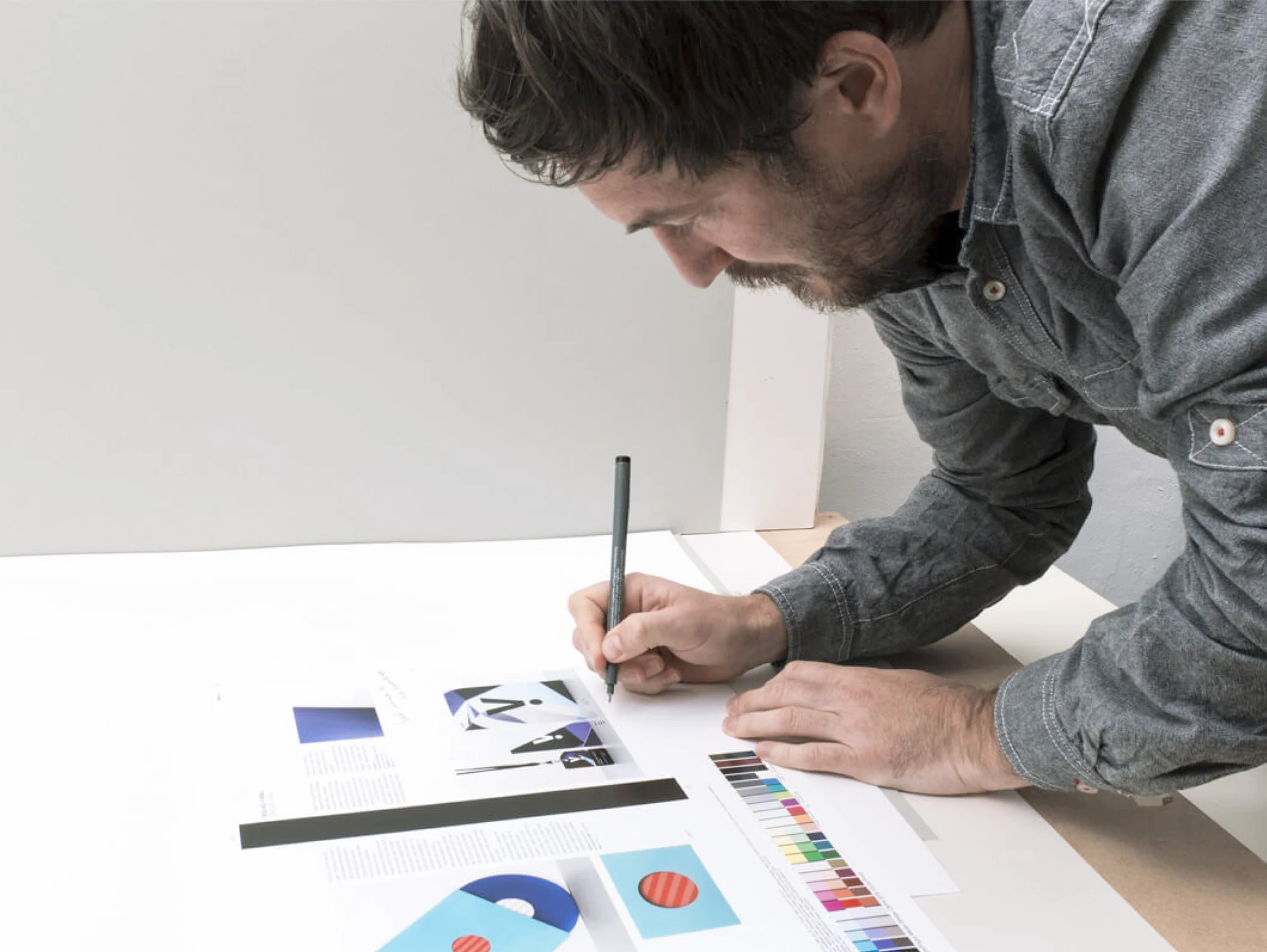
Also, without sounding like a total cliche, I cannot begin any project without initially developing ideas using a sketch pad and pen. This process is pivotal to my work and I enjoy spending time developing concepts on paper, before moving onto a computer. Once ideas are worked out on paper, I mostly use In-Design and Photoshop to develop the concepts further and render artwork.
What's your top secret for productivity?
Screen breaks. I have recently taken to walking home to make lunch, as it forces me away from the computer, and I find this break very productive. It clears my head and helps me focus on the afternoon, especially as my current daily hours are quite long.
Any interesting projects you've just launched or currently working on?
I'm currently working on my second book, which I love and symbolises a surprising deviation from what I thought was my set career path. In January I started a short-term lecturing appointment at Brighton University. I never intended to teach, the opportunity came out of the blue, but I really enjoy it. I have also started work on several very exciting editorial projects, one with a lifestyle brands and a record label, that was commissioned in the last few weeks. This, hopefully, signals a new direction for Transmission.
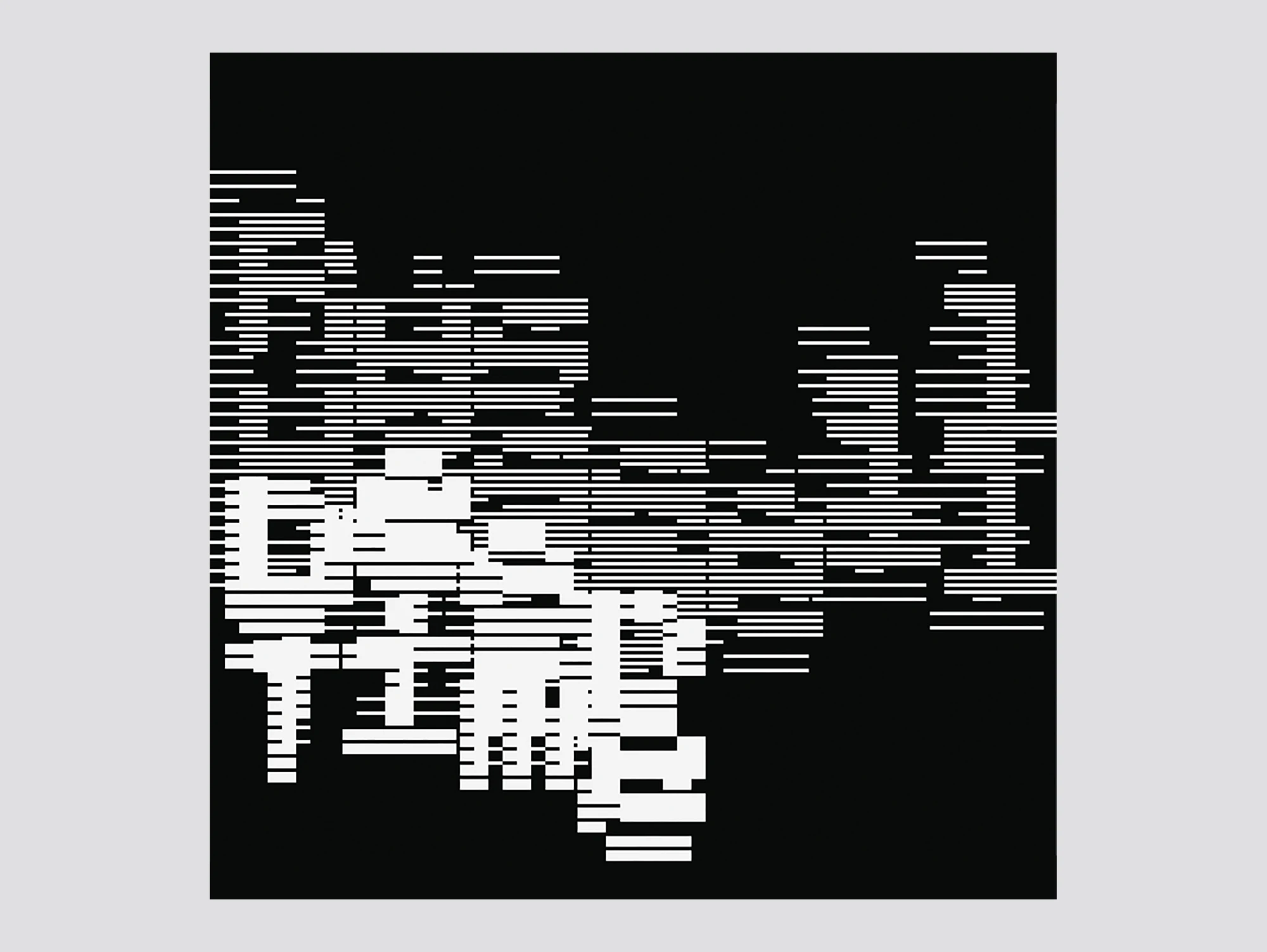
This year I intend to break up studio work with self-initiated poster design experiments. I have just completed an original artwork, the first in a couple of years, for a forthcoming group exhibition curated by Unlimited Gallery, which I really enjoyed. Self-initiated work is an important part of developing a visual style and something I want to do more of. I used to create posters, experimenting with lines, type and colour, that featured random lines from the film industry. My intention isn't necessarily commercial, although selling prints is always flattering, it's more to try something different.
Any projects you're especially proud of? Please explain why
The most mind-blowing was the launch of my first book, Collector's Edition: Innovative Packaging and Graphics, which was published by Thames & Hudson last August. I had been thinking about the concept for about four or five years, before approaching the publisher, and it took a further two years to complete. It was a massive personal achievement and I am very proud of the results.Collector's Edition is a celebration of the new wave of limited-edition music, book and magazine design and I thought the perfect way to complete the project was to create a limited edition series of its own. I took it upon myself to commission a series of 'cover bombs' and invited some of the biggest names in music, art and design to draw directly onto the cover of my book, in response to their artwork featured inside the book.
The contributor list was incredible, including Sir Paul McCartney, Nick Cave, Wayne Coyne and Stanley Donwood, amongst others, and the results were stunning. The idea was to auction these unique, hand-drawn books over a period of a month, to raise funds for The Alzheimer's Society. This was in memory of my Nan, who lost her battle with Dementia just before my book was published. The auction was a fantastic success. The series of nine unique editions all sold out and raised a total of £6,000, all donated to the charity.
Looking back, after the dust has settled on the project, I find it amazing that Sir Paul McCartney, one of the most famous musicians in history, and Nick Cave, a personal favourite, chose to draw on a copy of my book. This was a very proud and very surreal time in my life.
What's currently on your music playlist?
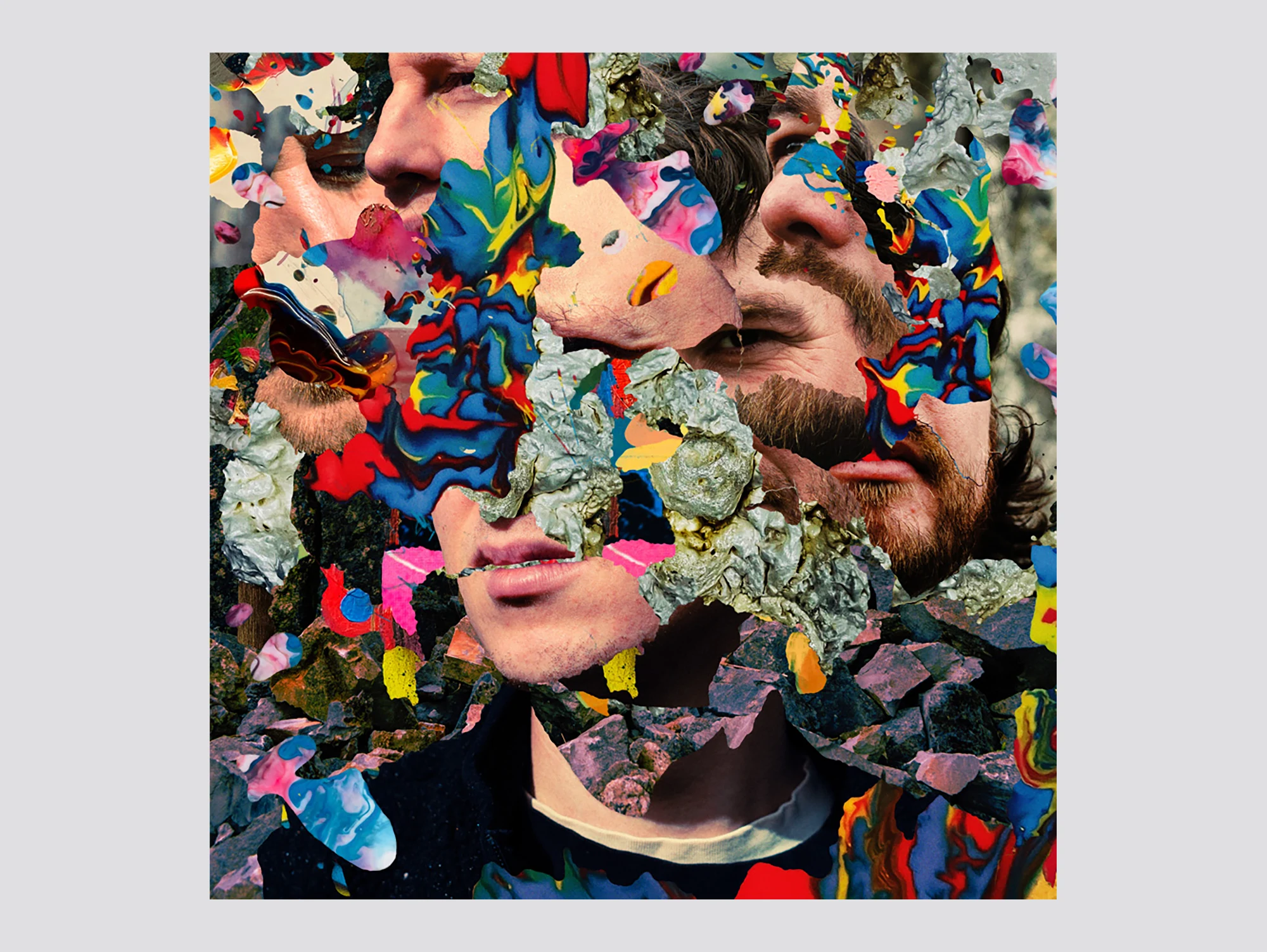
Music is very important, both at home and at the studio, but my playlist changes depending on who is in earshot. When everyone is in the studio we play Trentemøller (instrumental), Ras-G, Andy Stott, Rival Consoles, Goat, Hudson Mohawke, Gruff Rhys, Boom-Bip, 18+, Akkord and anything else we find interesting. I also like a bit of Raster Noton, Godflesh and The Melvins, but tend to keep that to when I am by myself.
What are you currently reading?
I mostly only read non-fiction books, generally about music sub-cultures, and am currently reading 'Hacienda: How Not to Run a Club' by Peter Hook. I was never really interested in the Manchester music scene when I was younger, despite its legendary status for excess, and have enjoyed catching up. It's a really easy read.
What was the last movie you saw at the cinema and what did you think?
I go to the cinema a lot and the last film I saw was Selma. It was excellent. David Oyelowo was brilliant. It was such an intensive role, not just in terms of subject, but also his amount of screen time. It was beautifully shot and, obviously, at times very upsetting.
Who's work do you admire and why?
My opinion often changes, depending on what surprises me, but I have great admiration for Irma Boom and also Stanley Donwood. This might be due to meeting them in person, while conducting interviews for Collector's Edition, and found them both fascinating and very generous people. I love how Irma continually to push the boundaries of book design. While at her Amsterdam studio she showed us the original embossing plates for her incredible Chanel No.5 book. I didn't get a chance to see the final book, but the plates alone were stunning.
What's the best piece of advice you've ever had?
I am not sure if this is advice someone told me or I am quoting some cheesy film, but I like the sentiment behind: 'It's better to regret what you have done than what you haven't'.